Pruning and canopy shaping are crucial steps in the care process of citrus trees, especially sweet oranges. These techniques not only help trees grow evenly and improve photosynthesis but also optimize yield by promoting uniform shoot and fruit development. Let BMFE Corp guide you through the most effective techniques to perform this practice.
1. Why Prune and Shape the Canopy?
Promote new branch development:
After each pruning session, the tree can produce 2–3 new shoots, resulting in a fuller and more balanced canopy. This sets a strong foundation for increased flowering and fruiting.
Encourage uniform shoot flushing:
When the tree grows evenly, activities like fertilizing, watering, and pest control become more efficient and cost-effective.
Optimize productivity:
An expanded canopy allows for even fruit distribution across all branches, improving both yield and fruit quality.
Reduce pest and disease pressure:
A well-ventilated canopy limits the development of pests and diseases that thrive in dense, shaded environments.
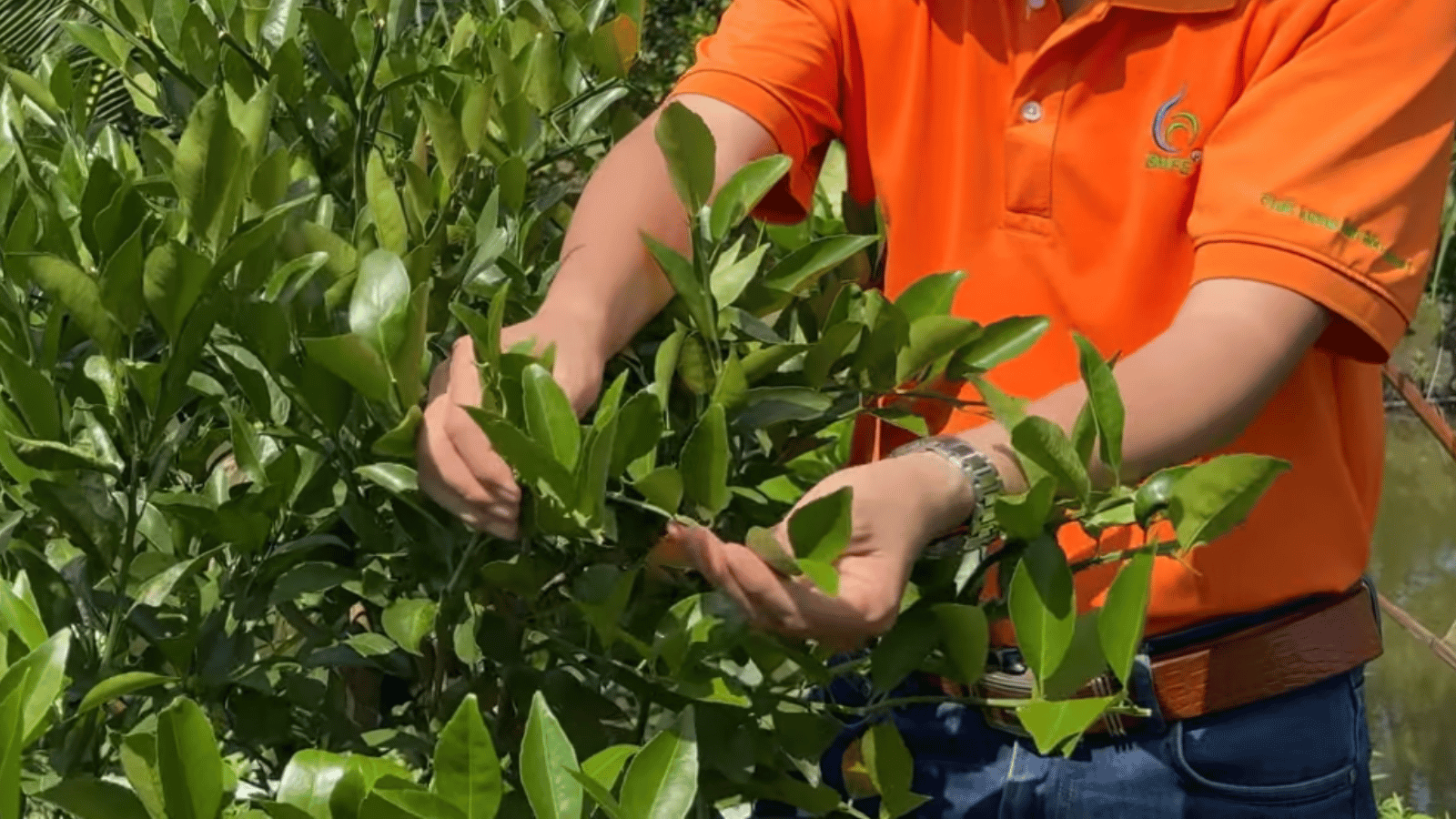
2. Technical Guide to Pruning and Shaping Sweet Orange Trees
a. Ideal Timing for Pruning
Prune when the tree begins to develop mature silk leaves that turn dark green—this indicates the branches are ready for new shoot growth.
b. Pruning Technique
Cutting position:
-
Prune each branch about 10–12 cm from the tip.
-
Each pruned branch can generate 2–3 new shoots from the cutting point.
Execution process:
-
Prune from the inside outward, focusing on creating a balanced canopy.
-
Repeat the process after each flush to maintain an open and symmetrical canopy.
c. Post-Pruning Care
Fertilization:
After pruning, apply NPK or organic fertilizer to stimulate new shoot growth.
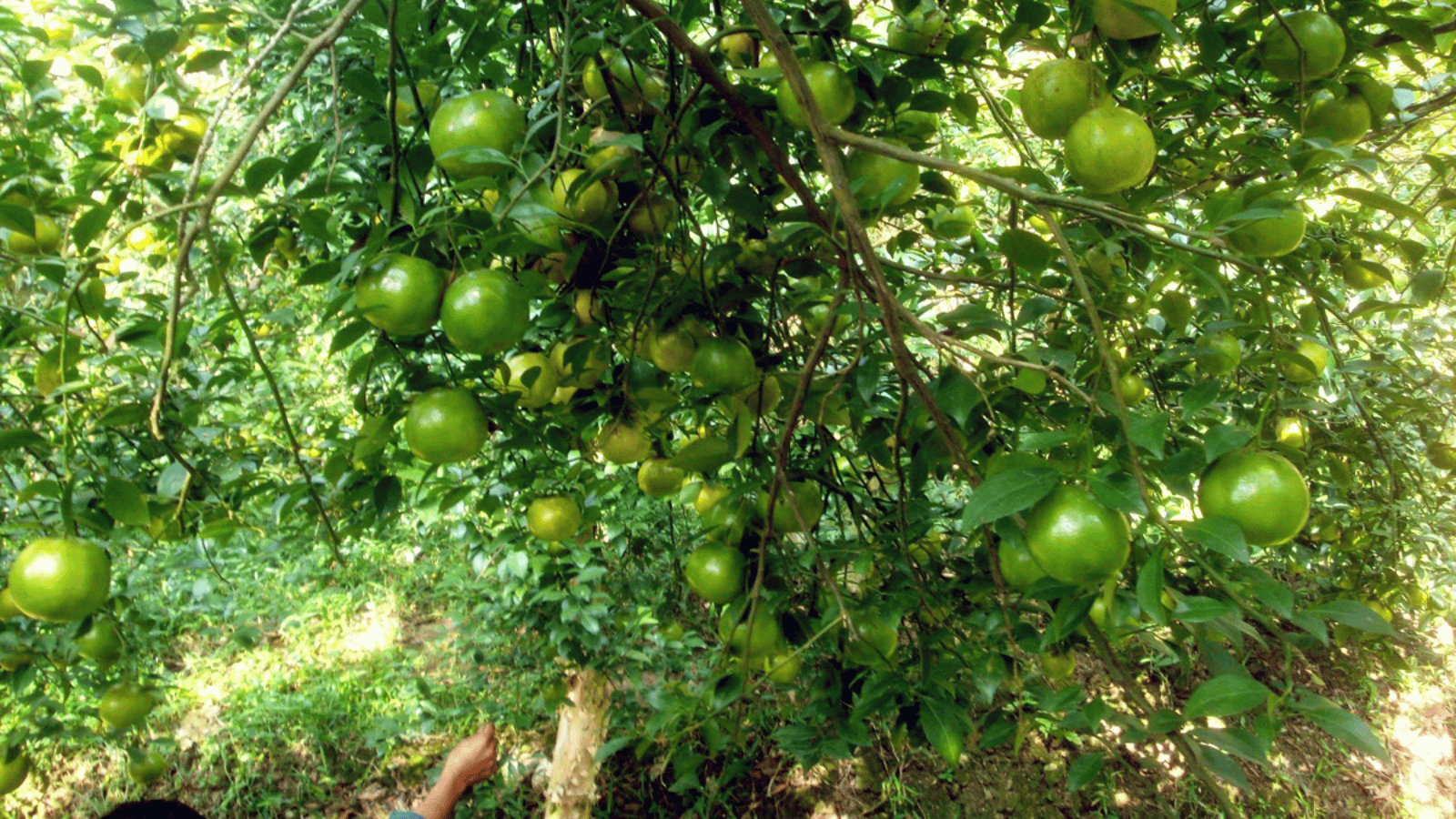
Suggested fertilizers:
-
18-46-0: High phosphorus content promotes strong root development.
-
30-10-10: Encourages uniform, vigorous shoot flushing.
-
20-10-10: Provides balanced nutrients for stable growth.
Apply fertilizer around the root zone or dilute with water for improved absorption.
Watering:
Ensure the tree receives sufficient water after pruning and fertilization, especially during the early shoot flush stage.
3. Benefits of Uniform Shoot Flushing
Cost savings:
When shoot development is synchronized, farmers can apply pesticides across the entire orchard at once, reducing labor and chemical costs.
Uniform shoots also simplify pest control, especially for pests like aphids and leaf miners that often target young shoots.
Improved care efficiency:
Fertilizing, spraying, and pruning can be conducted simultaneously, saving time and effort.
Increased yield:
Uniform shoot growth helps the tree develop evenly and bear fruit more consistently, improving overall productivity.
4. Effective Pest Management
Young shoot stage:
This is when pests such as leaf miners, aphids, and mites are most aggressive. Farmers should:
-
Apply pesticides at the correct time, ideally when new shoots first appear.
-
Use appropriate plant protection products and avoid excessive use.
Mature leaf stage:
At this stage, the leaves are older and more resistant to pest attacks.
Pesticide applications should be limited to treating mites only if symptoms appear.
5. Important Notes
-
Regular pruning and canopy shaping ensure proper ventilation and balanced growth.
-
Avoid cutting too deep into the branches to prevent significant damage.
-
Check soil moisture before fertilizing or watering to ensure optimal nutrient uptake.
-
Follow recommended dosage instructions when applying fertilizers and pesticides.
Reference: Cost of Growing Sweet Oranges from Planting to Harvest
Conclusion
Proper pruning, canopy management, and technical care not only help sweet orange trees grow healthily but also enhance fruit yield and quality. This is a crucial step in helping farmers reduce costs, save time, and improve economic efficiency.
If you need further guidance on techniques or product recommendations, feel free to contact BMFE Corp. We are always ready to support your journey toward effective and sustainable farming.