Using Plastic Mulch for Durian Cultivation: A Practical Solution for Farmers in the Southeast and Central Highlands of Vietnam

BMFE
Using Plastic Mulch for Durian Cultivation: A Practical Solution for Farmers in the Southeast and Central Highlands of Vietnam

    The use of plastic mulch in durian cultivation has become an effective solution that helps farmers improve yield, reduce risks, and increase the economic value of their crops—especially in the Southeast and Central Highlands regions. This method not only controls rainwater around the root zone and reduces fruit cracking but also enhances fruit setting and ensures better durian fruit quality.

    In this article, BMFE provides a detailed guide on how to properly use plastic mulch for durian trees, helping farmers apply the technique correctly and achieve the best results.
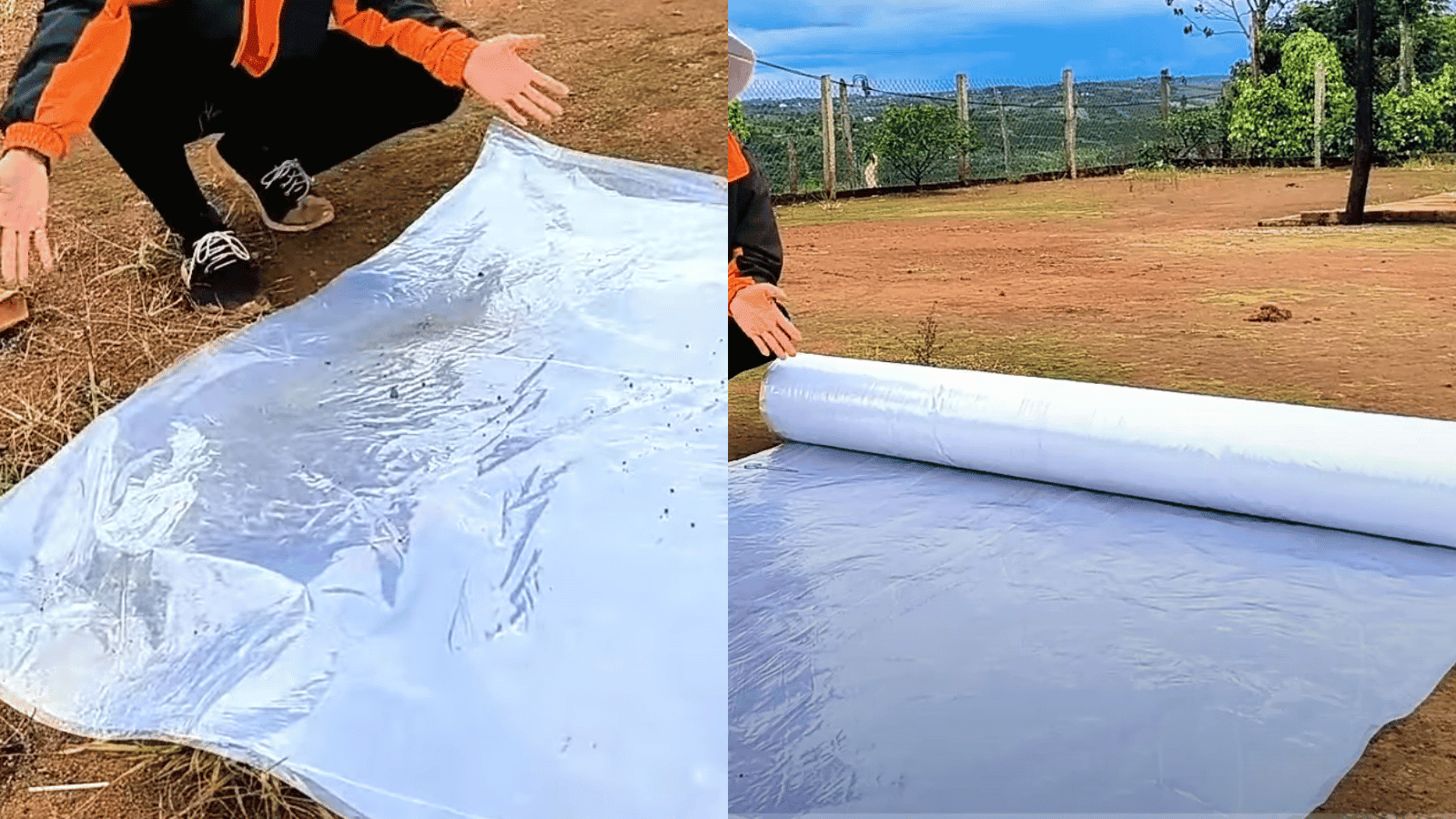

    Why Use Plastic Mulch for Durian Trees?

    • Reduce excess rainwater infiltration at the root zone: In regions like the Southeast and Central Highlands, heavy rains often cause waterlogging at the base of the tree, affecting respiration and nutrient absorption.

    • Control water uptake into the fruit: Excessive water can cause fruits to grow too quickly and unevenly, leading to cracked skins and lower visual quality.

    • Improve fruit setting: This method helps maintain stable moisture levels, promoting better pollination and fruit retention, thus reducing fruit drop.

    • Minimize disease risk: Mulching helps control soil moisture at the base, reducing the occurrence of diseases caused by fungi or bacteria.


    How to Properly Apply Plastic Mulch

    1. Prepare Materials

    • Specialized plastic sheets: Choose sheets with appropriate size, typically about 6x7 meters per tree base.

    • Cutting tools: Use scissors or sharp knives to cut the sheets to the desired size.

    2. Timing for Mulching

    • Begin applying mulch 30 days after flowering (post-anthesis) and continue throughout the fruit development stage.

    • This timing helps regulate rainwater and allows the tree to focus nutrients on fruit growth.

    3. Mulching Technique

    • Distance from tree base: Leave a 20–30 cm gap between the mulch and the trunk to allow ground moisture to evaporate naturally and avoid fungal issues at the base.

    • Placement: Spread the mulch in a circular shape under the canopy so rainwater will run off and not flow directly to the root zone.

    • Securing the mulch: Use rocks or heavy objects to hold down the edges and prevent wind from displacing the sheets.

    4. Investment Cost

    • On average, each sheet costs around 70,000 VND (excluding transport). One sheet is needed per tree to ensure optimal results.


    Effectiveness Comparison: With and Without Mulching

    With Mulch:

    • Fruits develop evenly with no cracks or deformities.

    • Higher fruit-setting rate, reduced early fruit drop.

    • Stable moisture around the root zone helps the tree maintain nutrient balance.

    Without Mulch:

    • Higher incidence of cracked or deformed fruits, reducing market value.

    • Root zones are prone to waterlogging, increasing fungal disease risks.

    • Significantly lower fruit-setting rates.


    Economic Benefits of Mulching

    • Higher yield: Increased fruit-setting rates and reduced risk of premature fruit drop.

    • Improved fruit quality: More uniform, attractive fruits with fewer deformities or cracks.

    • Reduced disease management costs: Minimizes disease outbreaks associated with excessive moisture.

    • Tree protection: Keeps the soil structure around the base stable, enhancing the tree’s longevity.


    Learn more: How to use plastic mulch effectively for durian cultivation?

    Let BMFE accompany you on the journey to sustainable and high-value agriculture.

    News

    SOIL MOISTURE AND PH SENSORS: SMART TOOLS TO HELP FARMERS CULTIVATE MORE EFFECTIVELY

    SOIL MOISTURE AND PH SENSORS: SMART TOOLS TO HELP FARMERS CULTIVATE MORE EFFECTIVELY

    INTERCROPPING AND RELAY CROPPING: MAXIMIZING LAND USE – SUSTAINABLE INCOME BOOST FOR FARMERS

    INTERCROPPING AND RELAY CROPPING: MAXIMIZING LAND USE – SUSTAINABLE INCOME BOOST FOR FARMERS

    CROP ROTATION AND CROP DIVERSIFICATION: SUSTAINABLE SOLUTIONS FOR HEALTHY SOIL AND HIGH YIELDS

    CROP ROTATION AND CROP DIVERSIFICATION: SUSTAINABLE SOLUTIONS FOR HEALTHY SOIL AND HIGH YIELDS

    ORGANIC AND BALANCED N-P-K FERTILIZATION: THE KEY TO HEALTHY PLANTS AND HIGH YIELDS

    ORGANIC AND BALANCED N-P-K FERTILIZATION: THE KEY TO HEALTHY PLANTS AND HIGH YIELDS

    WATER-SAVING MANAGEMENT – ALTERNATE WETTING AND DRYING (AWD) FOR RICE CULTIVATION

    WATER-SAVING MANAGEMENT – ALTERNATE WETTING AND DRYING (AWD) FOR RICE CULTIVATION

    RICE THRIPS (STENCHAETOTHRIPS BIFORMIS): IDENTIFICATION, SYMPTOMS, AND CONTROL METHODS

    RICE THRIPS (STENCHAETOTHRIPS BIFORMIS): IDENTIFICATION, SYMPTOMS, AND CONTROL METHODS

    CITRUS TREES – COMMON PESTS AND DISEASES & CONTROL MEASURES

    CITRUS TREES – COMMON PESTS AND DISEASES & CONTROL MEASURES

    MUSTARD GREENS AND CABBAGE – MAJOR PESTS (ARMYWORM, DIAMONDBACK MOTH, APHIDS): EFFECTIVE CONTROL METHODS

    MUSTARD GREENS AND CABBAGE – MAJOR PESTS (ARMYWORM, DIAMONDBACK MOTH, APHIDS): EFFECTIVE CONTROL METHODS

    BLACK PEPPER – QUICK WILT DISEASE (ROOT ROT CAUSED BY PHYTOPHTHORA): SYMPTOMS AND MANAGEMENT

    BLACK PEPPER – QUICK WILT DISEASE (ROOT ROT CAUSED BY PHYTOPHTHORA): SYMPTOMS AND MANAGEMENT

    COFFEE – HEMILEIA RUST DISEASE: DAMAGE AND MANAGEMENT TECHNIQUES

    COFFEE – HEMILEIA RUST DISEASE: DAMAGE AND MANAGEMENT TECHNIQUES

    DURIAN – ANTHRACNOSE ON LEAVES AND FRUITS: PREVENTIVE MEASURES

    DURIAN – ANTHRACNOSE ON LEAVES AND FRUITS: PREVENTIVE MEASURES

    MANGO – ANTHRACNOSE AFFECTS THE ENTIRE TREE: HOW TO IDENTIFY AND CONTROL

    MANGO – ANTHRACNOSE AFFECTS THE ENTIRE TREE: HOW TO IDENTIFY AND CONTROL

    Brown Planthopper and Rice Grassy Stunt Disease: Identification and Prevention Guide

    Brown Planthopper and Rice Grassy Stunt Disease: Identification and Prevention Guide

    White-Backed Planthopper in Rice: Symptoms and Effective Control Measures

    White-Backed Planthopper in Rice: Symptoms and Effective Control Measures

    How to Restore Hardpan and Depleted Soil: Revive the Soil – Grow Strong Rice – Harvest Big

    How to Restore Hardpan and Depleted Soil: Revive the Soil – Grow Strong Rice – Harvest Big

    RICE BUG DAMAGE: THE SILENT THREAT TO GRAIN AFTER HEADING THAT MANY OVERLOOK

    RICE BUG DAMAGE: THE SILENT THREAT TO GRAIN AFTER HEADING THAT MANY OVERLOOK

    GRAIN DISCOLORATION IN RICE: HOW TO PREVENT TOTAL CROP LOSS AFTER HEADING

    GRAIN DISCOLORATION IN RICE: HOW TO PREVENT TOTAL CROP LOSS AFTER HEADING

    SMALL RICE LEAF FOLDER: HOW TO IDENTIFY & COMPLETELY CONTROL BEFORE YOUR FIELD IS DEVASTATED

    SMALL RICE LEAF FOLDER: HOW TO IDENTIFY & COMPLETELY CONTROL BEFORE YOUR FIELD IS DEVASTATED

    Grassy Stunt and Ragged Stunt Disease in Rice: Early Detection & Field-Based Prevention Methods

    Grassy Stunt and Ragged Stunt Disease in Rice: Early Detection & Field-Based Prevention Methods

    Sheath Blight in Rice: Early Detection & 6 Effective Root-Level Solutions

    Sheath Blight in Rice: Early Detection & 6 Effective Root-Level Solutions

    CONQUER RICE BLAST DISEASE (LEAF BLIGHT) – 7 SIMPLE STEPS FOR A BUMPER HARVEST

    CONQUER RICE BLAST DISEASE (LEAF BLIGHT) – 7 SIMPLE STEPS FOR A BUMPER HARVEST

    BMFE WISHES YOU A HAPPY ĐOAN NGO FESTIVAL 2025

    BMFE WISHES YOU A HAPPY ĐOAN NGO FESTIVAL 2025

    Zalo
    Hotline
    Go Top