



Soil pH is a critical factor that determines the growth and nutrient absorption ability of durian trees. If the soil has a low pH (from 4.0 to 4.5), the roots will be damaged, reducing nutrient uptake, leading to stunted growth, no new shoot development, and low productivity. This article will guide farmers on how to treat low-pH soil to improve the soil environment and ensure healthy durian development.
1. Harm of Low Soil pH on Plants
-
Poor Root Development:
When soil pH is low, root hairs shrink, preventing nutrient absorption. -
Soil Toxicity:
Fertilizers are not absorbed in acidic soil but instead accumulate, causing "soil burning" and nutrient toxicity. -
Stunted Growth:
Low pH causes nutrient deficiency, leading to burnt old leaves, no new shoots, and weak trees.
2. Effective Solution to Raise Soil pH
-
Using Specialized Products:
-
Recommended Product:
Zinc Phosphate Solution 5L | pH 8.5 by BMFE CORP. -
How to Use:
Mix 1L of Zinc Phosphate with 400L of water and apply evenly to the entire orchard.
Repeat every 10–15 days for stable results.
-
3. Real Results After Application
-
Improved Soil pH:
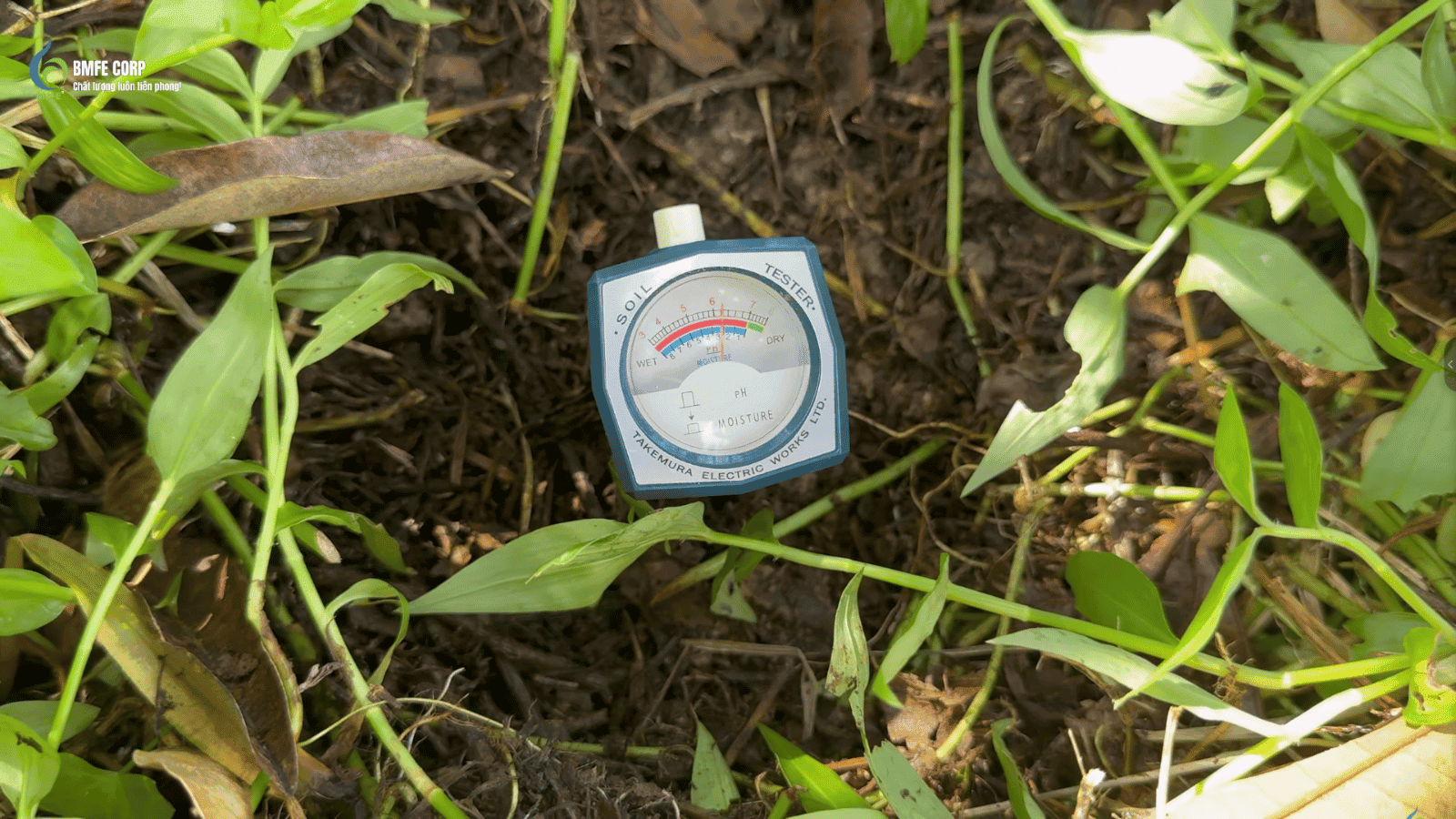
After applying 1 can, the pH increased from 4.0 to around 6.0–6.5 — ideal for durian. -
Tree Recovery:
Burnt leaves fall and are replaced by healthy ones.
New shoots sprout vigorously, and roots grow well with new feeder roots forming. -
4. Important Notes When Raising Soil pH
-
Avoid Fertilizing at pH < 5.0:
Roots cannot absorb nutrients and may be damaged. Adjust pH first. -
Maintain Ideal pH:
Durian thrives best at pH 5.5–6.5 for optimal nutrient uptake and growth. -
Monitor Regularly:
Check soil pH regularly to make timely adjustments.
5. Benefits of Stable Soil pH
-
Strong root system with effective nutrient absorption.
-
Even durian growth, regular new shoots, and fewer pests.
-
Ensures high yield and fruit quality.
6. Technical Support Contact
Farmers can contact BMFE Corp for technical consultation and how to use the Zinc Phosphate Solution 5L | pH 8.5 effectively.
Raising soil pH not only supports durian tree growth but also improves fertilizer efficiency and reduces costs. We hope this guide helps you apply the technique successfully in your durian orchard.
Wishing you a productive and successful growing season!