
GUIDE TO IDENTIFYING MATURE DURIAN FOR OPTIMAL HARVESTING

BMFE
GUIDE TO IDENTIFYING MATURE DURIAN FOR OPTIMAL HARVESTING

    GUIDE TO IDENTIFYING THE RIGHT HARVEST TIME FOR DURIAN – MAXIMIZE QUALITY AND ECONOMIC VALUE

    Harvesting durian at the right time not only ensures fruit quality but also enhances its market value. This article will guide farmers on how to accurately and effectively determine the ideal time to harvest durian.


    1. Importance of Harvesting at the Right Time

    • For local consumption: Properly timed harvesting delivers the best flavor, with golden, fragrant, and creamy flesh.

    • For traders and export: Fruits are harvested when mature (about 70–75% ripeness), ensuring they can be handled and transported long distances without quality loss.

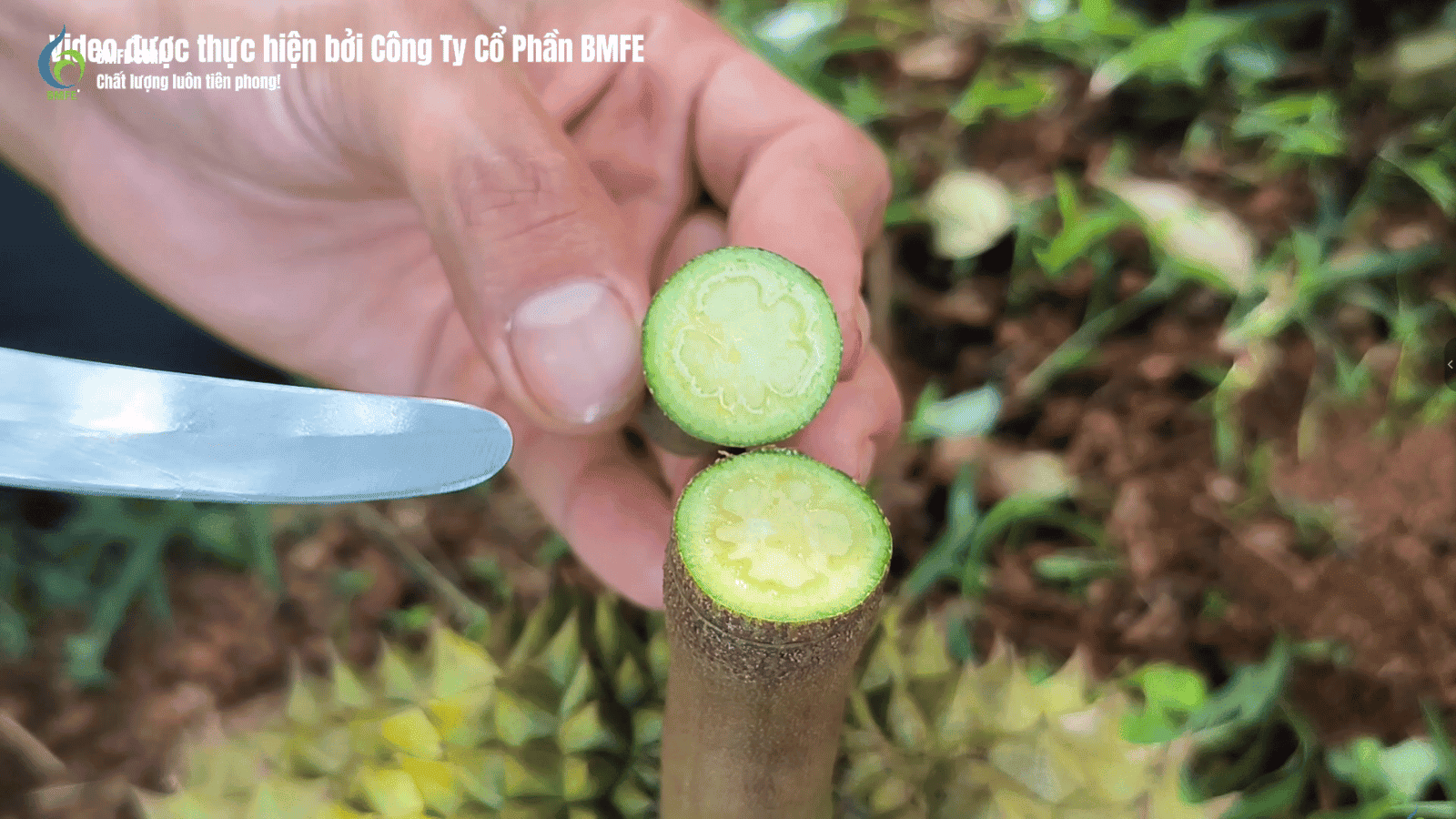
    • Kiểm tra mật ở cuống trái


    2. How to Recognize Durian Ready for Harvest

    a. Observe the Fruit Stem and Thorn Lines

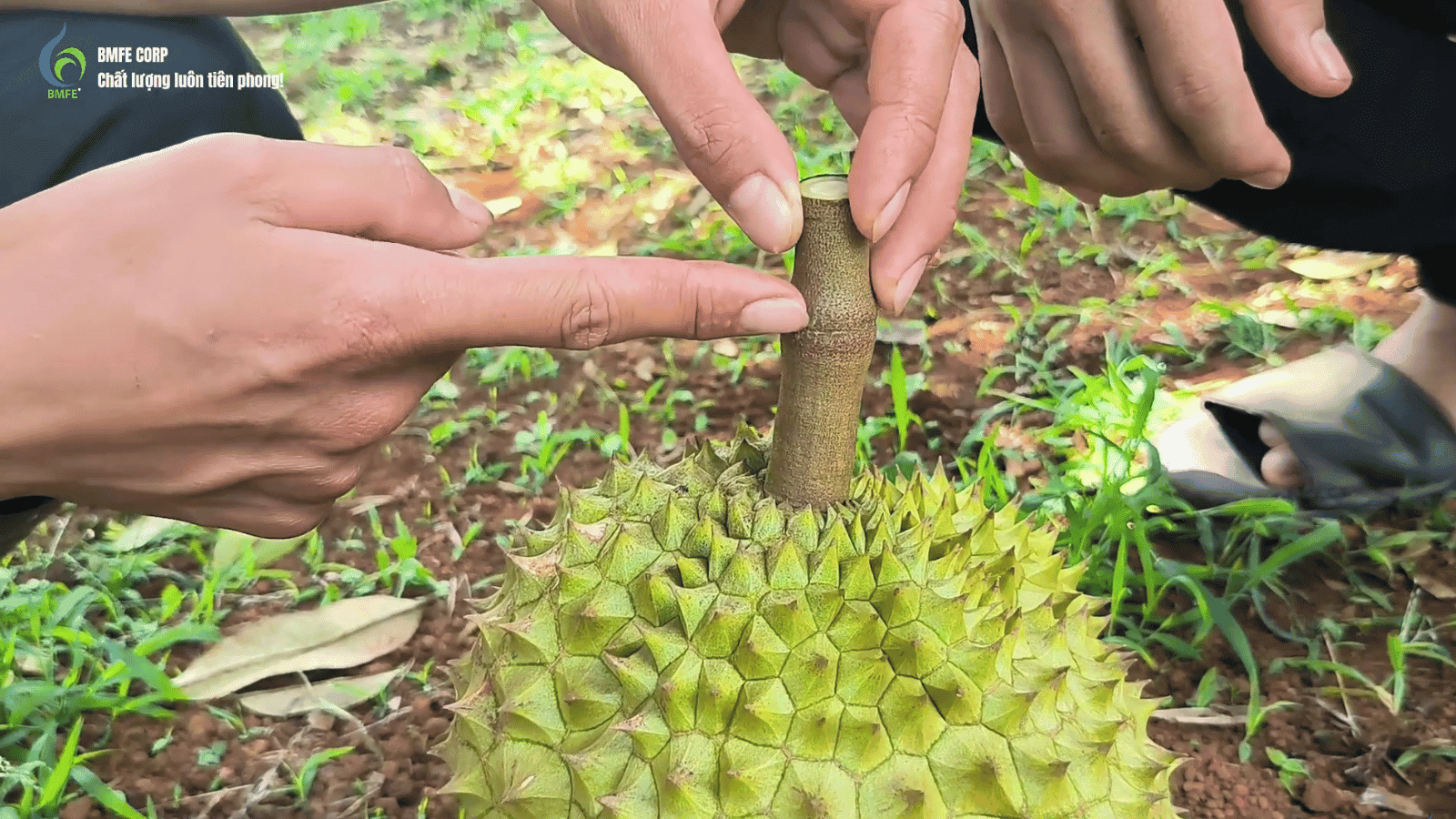
    • Fruit stem:
      If the groove between the stem joints becomes more defined and darker in color, the fruit is mature.

    • Thorn lines:
      When mature, the gaps between the thorns widen and darken compared to immature fruit.

    b. Tapping the Fruit to Check Ripeness

    • Sound test:

      • Immature fruit: Produces a solid sound with no hollowness.

      • Mature fruit (ready to harvest): Sounds slightly hollow, indicating the flesh has started separating from the shell.

      • Fully ripe fruit: Produces a clear, resonant sound due to larger gaps inside.

    • Best time to tap:
      Tap in the morning or late afternoon for the most accurate sound. Avoid noon when fruit sounds misleadingly riper.

    • Where to tap:
      Tap the “pocket” area (where flesh and shell meet), not the thorn gaps.

    c. Check the Sap at the Fruit Stem

    • Cut the stem:
      If clear sap flows when the stem is cut, the fruit is likely mature.

    • Taste the sap:
      A slightly sweet taste indicates the fruit is ready.

    • Observe the stem cut:
      A clear flower-shaped pattern and abundant sap inside signal a mature fruit.

    • Quan sát cuống trái và đường rãnh gai


    3. Ideal Ripeness Based on Intended Use

    a. For trade and export

    • Harvest at 70–75% ripeness.

    • The flesh is yellow but still firm, suitable for handling and transportation.

    b. For local markets or immediate consumption

    • Harvest at 90–95% ripeness.

    • Flesh is golden, fragrant, rich, and soft – ideal for eating fresh.


    4. Important Notes When Harvesting Durian

    • Avoid immature fruits:
      They lack flavor, have pale flesh, and are often underdeveloped.

    • Don’t wait for natural fruit drop:
      Dropped fruits are unsuitable for export and easily damaged during storage.

    • Post-harvest handling:
      Store durians in cool, dry areas away from sunlight and impact.


    Conclusion

    Identifying the right time to harvest durian is crucial for maximizing yield and economic return. Proper techniques ensure fruit quality and increase market value.

    If you need further technical guidance or high-quality agricultural support products, contact BMFE Corp. We are always ready to accompany farmers on the journey to sustainable and efficient cultivation!

    News

    SOIL MOISTURE AND PH SENSORS: SMART TOOLS TO HELP FARMERS CULTIVATE MORE EFFECTIVELY

    SOIL MOISTURE AND PH SENSORS: SMART TOOLS TO HELP FARMERS CULTIVATE MORE EFFECTIVELY

    INTERCROPPING AND RELAY CROPPING: MAXIMIZING LAND USE – SUSTAINABLE INCOME BOOST FOR FARMERS

    INTERCROPPING AND RELAY CROPPING: MAXIMIZING LAND USE – SUSTAINABLE INCOME BOOST FOR FARMERS

    CROP ROTATION AND CROP DIVERSIFICATION: SUSTAINABLE SOLUTIONS FOR HEALTHY SOIL AND HIGH YIELDS

    CROP ROTATION AND CROP DIVERSIFICATION: SUSTAINABLE SOLUTIONS FOR HEALTHY SOIL AND HIGH YIELDS

    ORGANIC AND BALANCED N-P-K FERTILIZATION: THE KEY TO HEALTHY PLANTS AND HIGH YIELDS

    ORGANIC AND BALANCED N-P-K FERTILIZATION: THE KEY TO HEALTHY PLANTS AND HIGH YIELDS

    WATER-SAVING MANAGEMENT – ALTERNATE WETTING AND DRYING (AWD) FOR RICE CULTIVATION

    WATER-SAVING MANAGEMENT – ALTERNATE WETTING AND DRYING (AWD) FOR RICE CULTIVATION

    RICE THRIPS (STENCHAETOTHRIPS BIFORMIS): IDENTIFICATION, SYMPTOMS, AND CONTROL METHODS

    RICE THRIPS (STENCHAETOTHRIPS BIFORMIS): IDENTIFICATION, SYMPTOMS, AND CONTROL METHODS

    CITRUS TREES – COMMON PESTS AND DISEASES & CONTROL MEASURES

    CITRUS TREES – COMMON PESTS AND DISEASES & CONTROL MEASURES

    MUSTARD GREENS AND CABBAGE – MAJOR PESTS (ARMYWORM, DIAMONDBACK MOTH, APHIDS): EFFECTIVE CONTROL METHODS

    MUSTARD GREENS AND CABBAGE – MAJOR PESTS (ARMYWORM, DIAMONDBACK MOTH, APHIDS): EFFECTIVE CONTROL METHODS

    BLACK PEPPER – QUICK WILT DISEASE (ROOT ROT CAUSED BY PHYTOPHTHORA): SYMPTOMS AND MANAGEMENT

    BLACK PEPPER – QUICK WILT DISEASE (ROOT ROT CAUSED BY PHYTOPHTHORA): SYMPTOMS AND MANAGEMENT

    COFFEE – HEMILEIA RUST DISEASE: DAMAGE AND MANAGEMENT TECHNIQUES

    COFFEE – HEMILEIA RUST DISEASE: DAMAGE AND MANAGEMENT TECHNIQUES

    DURIAN – ANTHRACNOSE ON LEAVES AND FRUITS: PREVENTIVE MEASURES

    DURIAN – ANTHRACNOSE ON LEAVES AND FRUITS: PREVENTIVE MEASURES

    MANGO – ANTHRACNOSE AFFECTS THE ENTIRE TREE: HOW TO IDENTIFY AND CONTROL

    MANGO – ANTHRACNOSE AFFECTS THE ENTIRE TREE: HOW TO IDENTIFY AND CONTROL

    Brown Planthopper and Rice Grassy Stunt Disease: Identification and Prevention Guide

    Brown Planthopper and Rice Grassy Stunt Disease: Identification and Prevention Guide

    White-Backed Planthopper in Rice: Symptoms and Effective Control Measures

    White-Backed Planthopper in Rice: Symptoms and Effective Control Measures

    How to Restore Hardpan and Depleted Soil: Revive the Soil – Grow Strong Rice – Harvest Big

    How to Restore Hardpan and Depleted Soil: Revive the Soil – Grow Strong Rice – Harvest Big

    RICE BUG DAMAGE: THE SILENT THREAT TO GRAIN AFTER HEADING THAT MANY OVERLOOK

    RICE BUG DAMAGE: THE SILENT THREAT TO GRAIN AFTER HEADING THAT MANY OVERLOOK

    GRAIN DISCOLORATION IN RICE: HOW TO PREVENT TOTAL CROP LOSS AFTER HEADING

    GRAIN DISCOLORATION IN RICE: HOW TO PREVENT TOTAL CROP LOSS AFTER HEADING

    SMALL RICE LEAF FOLDER: HOW TO IDENTIFY & COMPLETELY CONTROL BEFORE YOUR FIELD IS DEVASTATED

    SMALL RICE LEAF FOLDER: HOW TO IDENTIFY & COMPLETELY CONTROL BEFORE YOUR FIELD IS DEVASTATED

    Grassy Stunt and Ragged Stunt Disease in Rice: Early Detection & Field-Based Prevention Methods

    Grassy Stunt and Ragged Stunt Disease in Rice: Early Detection & Field-Based Prevention Methods

    Sheath Blight in Rice: Early Detection & 6 Effective Root-Level Solutions

    Sheath Blight in Rice: Early Detection & 6 Effective Root-Level Solutions

    CONQUER RICE BLAST DISEASE (LEAF BLIGHT) – 7 SIMPLE STEPS FOR A BUMPER HARVEST

    CONQUER RICE BLAST DISEASE (LEAF BLIGHT) – 7 SIMPLE STEPS FOR A BUMPER HARVEST

    BMFE WISHES YOU A HAPPY ĐOAN NGO FESTIVAL 2025

    BMFE WISHES YOU A HAPPY ĐOAN NGO FESTIVAL 2025

    Zalo
    Hotline
    Go Top